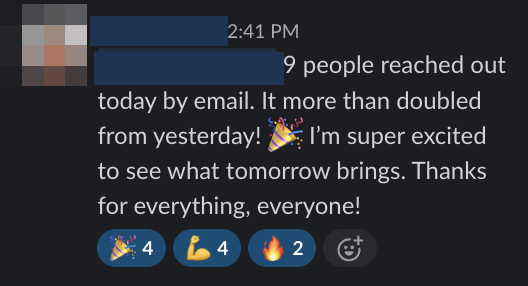
Booked-call wins
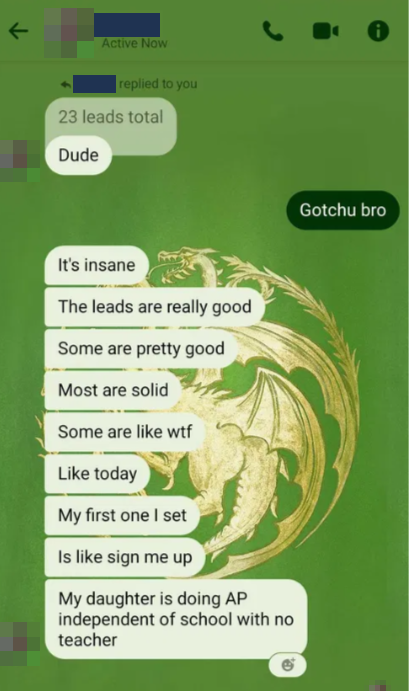
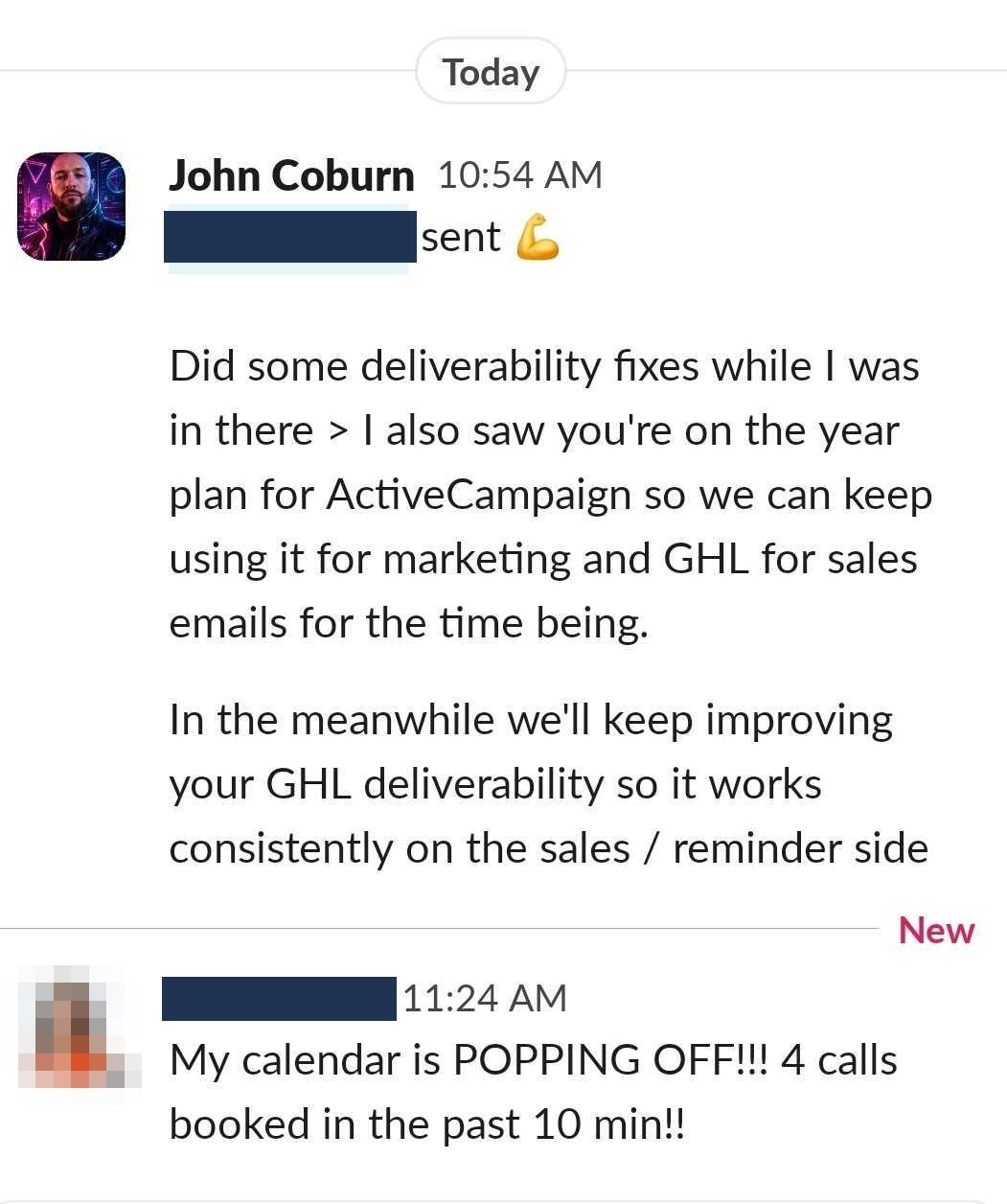 View full screenshot ↗
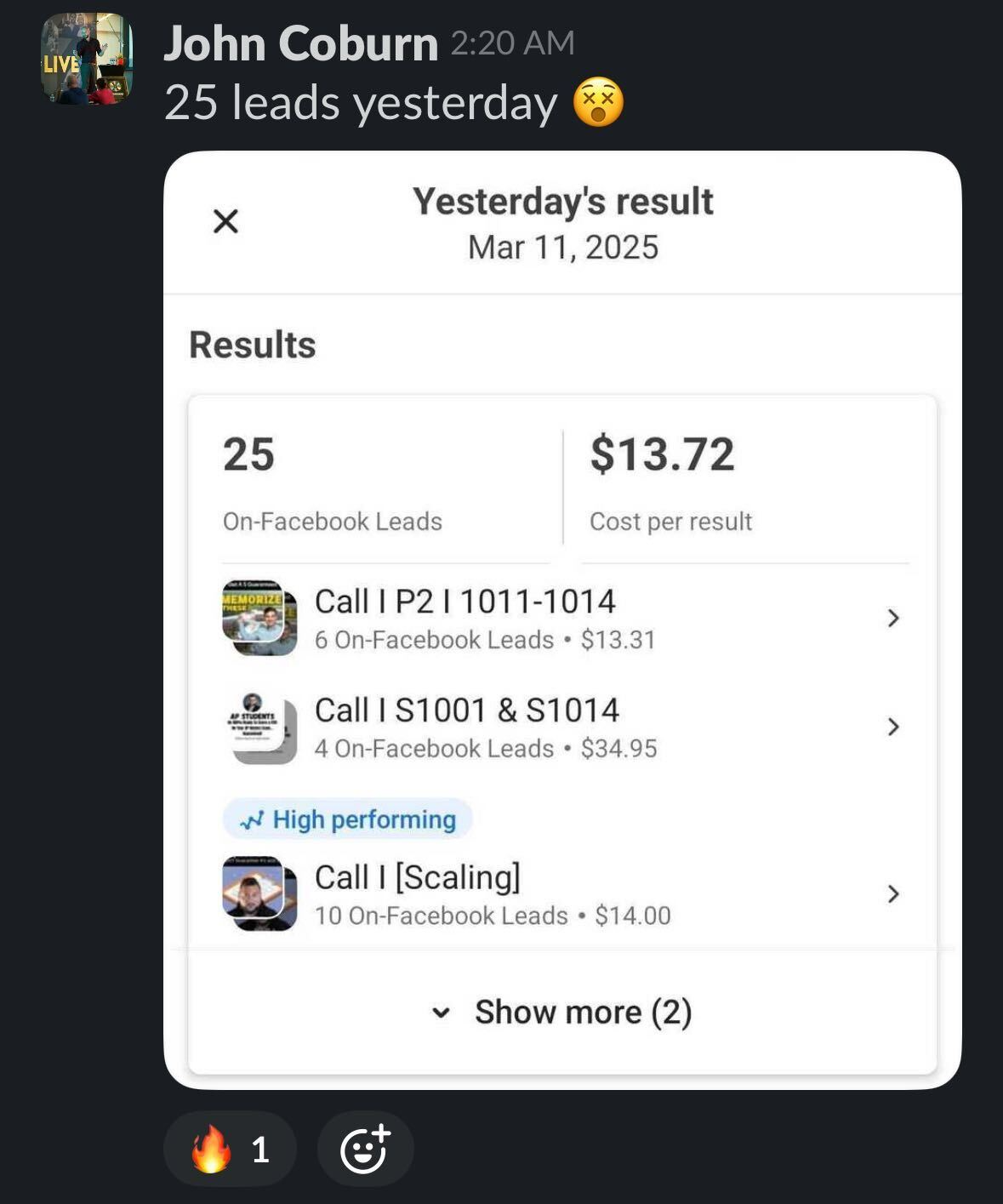
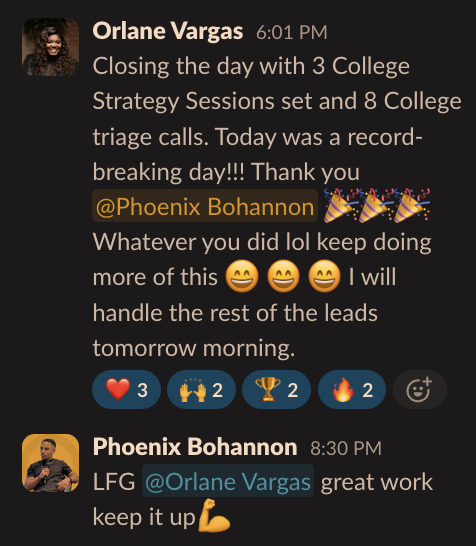 View full screenshot ↗
See the June email inquiry update
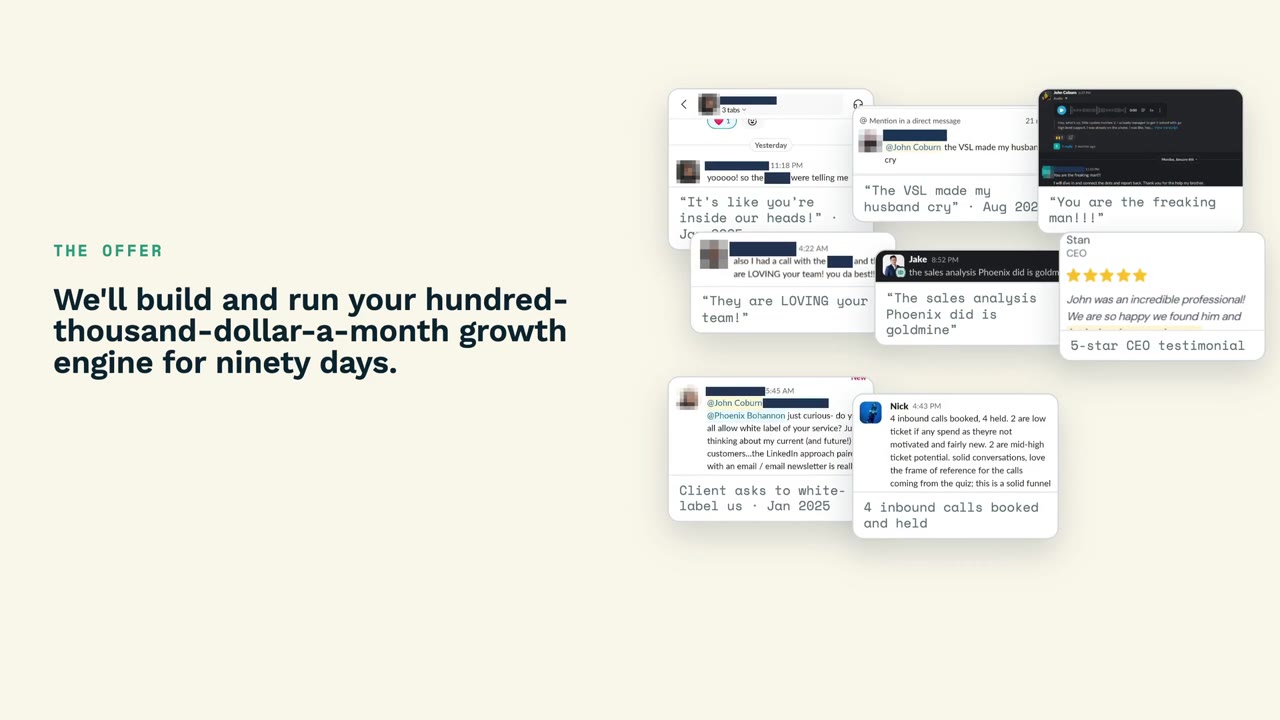
Done for you · 90-Day Growth Partner Sprint
We build your funnel, CRM and follow-up, run your approved ads, and personally call, qualify and book your leads. You close and deliver. By day 90, the tested system and playbook are yours to run.
 12:18
Play the video: how we build and run your growth engine, about 12 minutes
Watch how we build and run your growth engine · 12 minutes · Prefer to read? Read the walkthrough
One tutoring client signed $121K in January and $164K in March 2026 during a longer partnership.
For businesses with an offer that already sells, a closer, and capacity to serve more customers.
Plan on at least $100/day in client-paid ad spend once testing starts.
2/5 Cohort 1 seats filled
The setup fee goes up by $5,000 when Cohort 1 fills.
We call the leads. If inquiries pile up every time you get busy, buying more just gives you a bigger pile you’re paying for. In the 90-Day Growth Partner Sprint, we build the funnel, run the ads, and pick up the phone ourselves. You take the closing calls.
Here’s an example of what lands on your calendar. We’ve already called, found out what the person needs, and checked that they fit. You get a name, a time, why they reached out, and what to ask first. You walk into the call knowing who you’re talking to.
A lead goes quiet, so you change the ads. Then the page. Then the pitch. Who actually spoke to that person? What did they tell you? If nobody knows, you can pay to fix the wrong thing three times.
We installed this kind of system for a tutoring business and stayed on as a longer-term partner. They went from averaging about twenty-two and a half thousand dollars a month in cash collected in twenty twenty-four, to fifty thousand in twenty twenty-five, to about a hundred and eight thousand a month from January through April twenty twenty-six, their peak season. In March alone, they signed a hundred and sixty-four thousand dollars in contracts. Those are signed contracts. Cash collected is the line you just saw.
A hundred-thousand-dollar month starts with math. What do you collect per sale? What can you afford to spend to get a customer? How many customers can you actually serve? We work backward from those numbers. Here’s what we do in ninety days.
Step one. We build and launch. We sharpen the offer you already sell, build the funnel and CRM, and set up reminders and follow-up in your accounts. We write and edit your video ads and push a test lead through the whole thing. Once you approve the launch, plan on at least a hundred dollars a day for media, paid separately.
Step two. We run and improve it. Phoenix leads setting. I back him up. We call, qualify and book the leads during agreed hours. You get the scripts and we review closing calls with you. Your team closes and delivers. If we keep hearing, “I thought this was for beginners,” we find the line that gave them that idea. We change it and check who qualifies, who shows up, and what those calls cost. That’s Market–Message Match.
Step three. We hand you the keys. By day ninety you have the tested ads and scripts, the tracking, and a playbook your team has practiced. It all lives in your accounts. You can take it in-house, or if we both want to keep building, we agree on what’s next.
Who is this for? Your offer already sells and gets customers results. You understand what an offer is and you’re serious about growing your business. Someone takes your closing calls, and you have room to serve more customers. You have an internal locus of control. You review the calls, make the changes, and follow through on what’s yours. You want to see how far you can take this.
Who is this not for? If you’re still looking for your first paying customer, start there. This isn’t for you if you need hand-holding every day or a ridiculous guarantee before you’ll act. We’ll help when you’re stuck. You still have to own your part. And if your whole market is a short list of named buyers, start with direct outreach.
Book a call below to see if you’re a fit. It’s a forty-five-minute Strategy Session with Phoenix. Bring one real inquiry and we’ll look at what happened and what’s worth fixing first.
We sharpen your offer and build the funnel, CRM, follow-up and video ads in your accounts. We test the path from first click to booked call, then launch with your approval.
We run the ads and personally call, qualify and book leads during agreed hours. You close and deliver. Every week, we use the calls and numbers to decide what to change.
Your team practices running the system. You keep the tested ads, scripts, playbook and reporting in your accounts. Take it in-house or agree on the next scope together.
Proof · Case file, anonymised
1 January 2025 to 18 July 2026, across a longer-term engagement. Here’s what the underlying numbers actually show, and how they differ from cash collected.
Closed contracts are the value of contracts signed, not cash collected. Source: the shared client KPI tracker, verified 18 July 2026.
$108,395 average monthly cash collected from January through April 2026, the peak exam season. March reached $143,657 and April reached $110,836. Including the summer dip in May and June, the six-month average was $95,525.
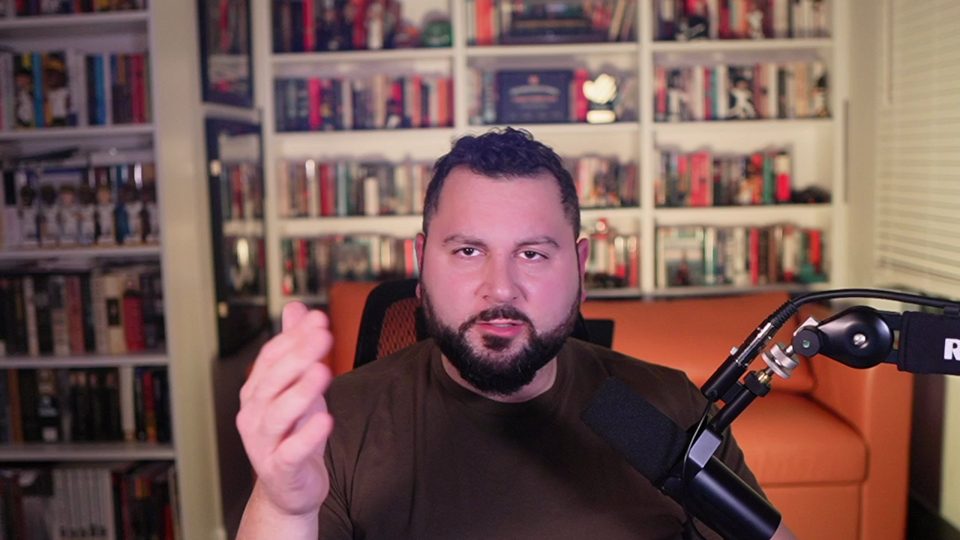 8:03
Play Joe’s full testimonial, about 8 minutes
These historical results cover the offer, funnel, ads, follow-up and sales support across a longer engagement.
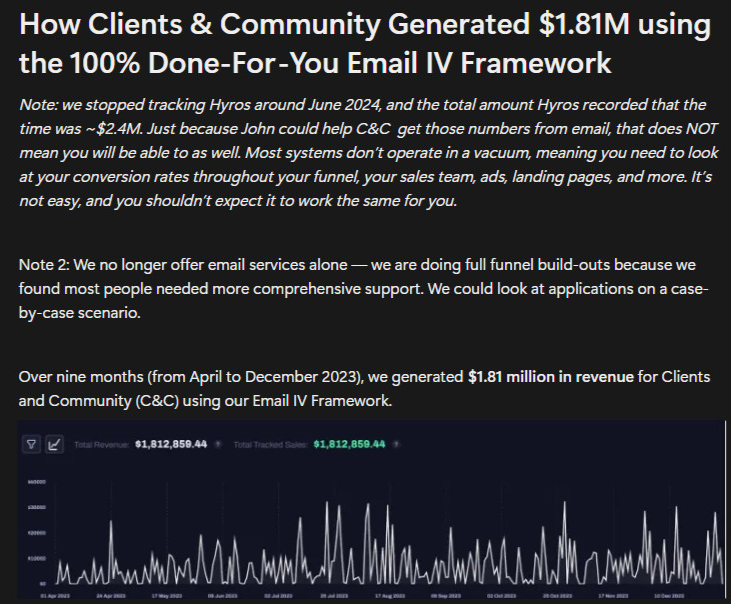
View full screenshot ↗View full screenshot ↗Case 2 · A separate engagement
$1.81M in Hyros-attributed email revenue over nine months. The engagement’s tracking attributed these sales to email.
Chris Stapleton, Clients & Community. Full published testimonial, 22 seconds.
utm_content=AD-102Fit answers: 4 of 4Stage: New · Owner: Setter AFit: yes · reason loggedHeld · Won · reason: timingWe trace each inquiry to the ad that brought it in. Then we use the call notes to decide what to change and the cost per qualified held call to judge the test.
Loop 1 · Creative
Loop 2 · Sales
Credit goes to one complete ad. Its creative ID and UTMs are registered before launch, and qualified bookings, held calls and sales are counted against that ID. This is what decides spend.
Hook, opener, body and CTA are tagged so we can read patterns across ads. A segment never earns credit on its own. It tells us which single variable to test next.
| Creative ID | What changed | Qualified bookings | Held calls | Read |
|---|---|---|---|---|
| AD-101 | Control | 12 | 8 | Baseline |
| AD-102 | Hook only | 17 | 13 | New control. Next test: opener |
| AD-103 | CTA only | 19 | 7 | More bookings, fewer held calls. Keep the old CTA |
The creative matrix
This is where a single creative change happens: a new hook, opener, body or CTA, with the rest held steady. It isn’t the Hold, Fix, Scale matrix in the process map, which is about spend decisions.
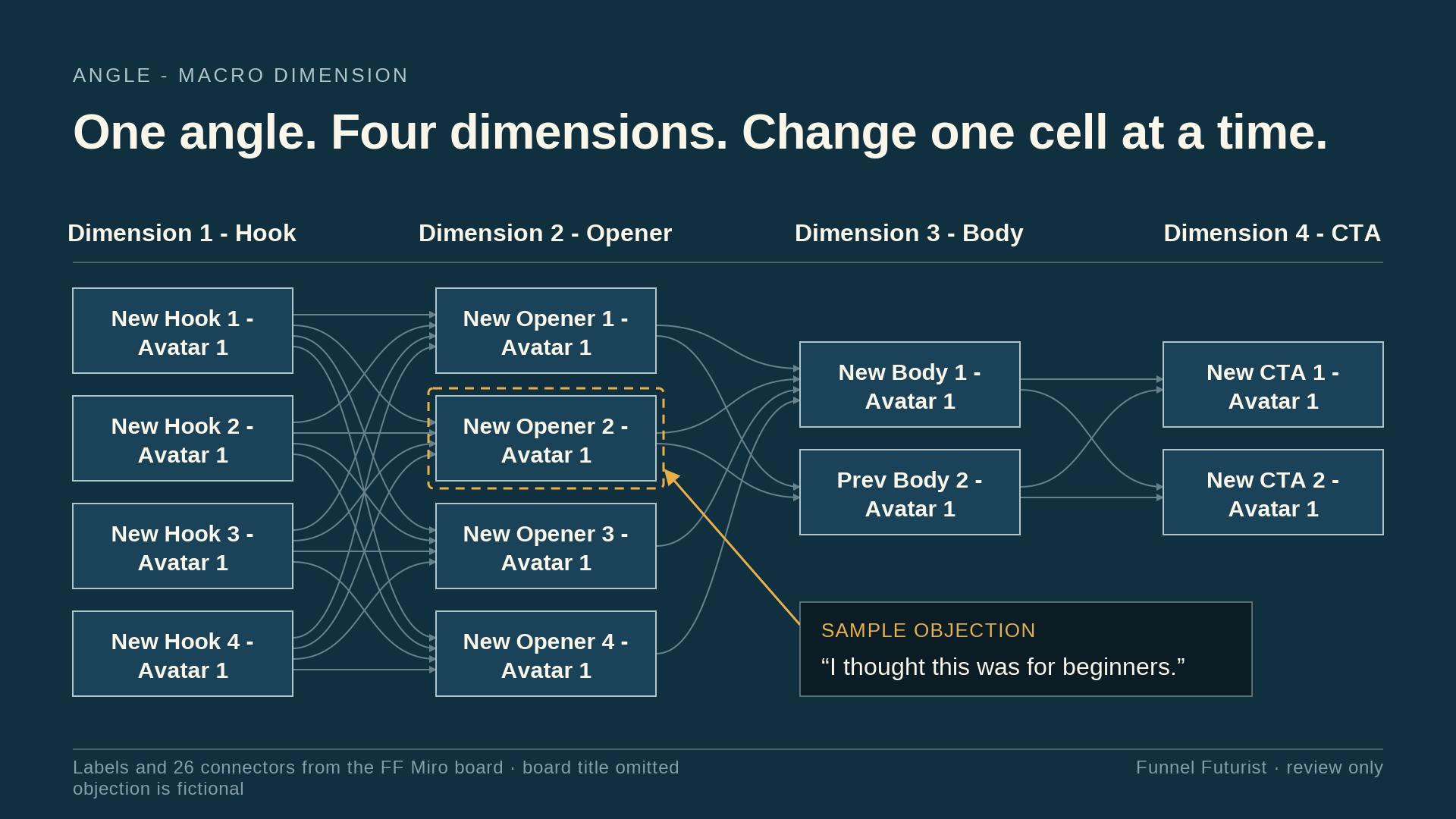
Dimension 1 · Hook
Every hook connects to every opener
Dimension 2 · Opener
Every opener feeds New Body 1. Openers 1 and 2 also feed Prev Body 2
Dimension 3 · Body
Both bodies feed both CTAs
Dimension 4 · CTA
Sample objection (fictional)“I thought this was for beginners.” → change Opener 2 only, then retest.
Sales setting & closing support
Phoenix leads setting and qualification. John runs marketing and backs him up on calls. You take the closing calls.
 1:26
Play Rob Rammuny’s testimonial
 2:00
Play Orlane Vargas’s testimonial
 1:23
Play Jim Coburn’s testimonial
Follow the six stages to see what to build, what to measure, and what to fix before you spend more. In the Sprint, we build the funnel, run the ads and work the leads for you, so you can move through the first stages faster.
Full six-stage mapWho does whatTiming, KPIs and leversAd spend exampleThe two improvement loops
Run the map yourself if your team can build the funnel, work the leads and improve it every week. Hire for ads alone if your funnel and sales team already turn demand into sales. Use the Sprint when you need the whole system built and run for you.
Scroll sideways to follow every return line. The step-by-step version below has the same gates and links.
Stage 0Diagnose
Market, avatar, offer and pitch, then the macro constraints: demand, economics and capacity.
One binding constraint demonstrated?
Stage 1Offer foundations
Market, avatar, offer, economics, pitch, and messaging matrix.
Offer, message and economics viable?
Stage 2Go-to-market
One acquisition lane. A QA test lead runs intake → owner → action → booked or not booked → disposition.
End-to-end QA passed, with evidence?
Every lead is called as it arrives. We trust the numbers only at the volume and window set in advance.
Raw application cost within limit at the pre-set volume and window?
Stage 3Call, qualify, book
Setter feedback, objections and fit. Cost per qualified application and per qualified booking.
Market–Message Match confirmed?
One objection is a clue, not proof.
Feeds back to avatar and message (Stage 1) and ad creative and scripts (Stage 2).
Stage 4Close, improve, scale
Your team closes and delivers. We read mature qualified held calls, unit economics and capacity.
Close rate ≥ 20% on mature qualified held calls?
Profitable and repeatable at the 30% close target and within allowable CAC?
Stage 5Handover
Client-owned accounts, assets, SOPs and reporting. Your operator demonstrates the workflow.
Operator demonstration passed?
We bring the build templates, test checklist and lead coverage so your team can move quickly from approval to a working system. Timing depends on access, approvals, and how fast we can get useful evidence.
| Stage | Planning window | What we read |
|---|---|---|
| 0 Diagnose | about 3–5 days* | One constraint, with evidence |
| 1 Offer foundations | about 5–10 days* | Offer economics work on paper |
| 2 Go-to-market | build about 14 days once inputs and access are ready*; test against an agreed sample, window and cap | QA pass, then cost per raw application |
| 3 Call, qualify, book | alongside the test | Qualified application and booking cost, show rate, objections |
| 4 Close, improve, scale | once held calls are mature | Close rate, contribution, capacity, cash timing |
| 5 Handover | by day 90 | Your operator runs a representative shift |
* Planning ranges. Diagnosis and foundations follow our wider process map. The build window assumes agreed inputs and access.
Where a weak number usually points first: click-through → creative · application rate → page · booking rate → setting · show rate → reminders · close rate → offer, pitch and coaching. That's where to look first. It doesn't prove the cause. If the same number stays weak after a fix, go up a level, back to the market, avatar, offer or pitch.
Continue when one binding constraint is demonstrated with evidence: demand, conversion, economics, fulfilment or capacity.
We trace a real inquiry from first touch to outcome and set a baseline. If no single constraint is clear, we realign the starting point, or agree that now isn’t the right time.
Continue when the offer, message and economics are viable on paper.
Check the market, avatar, offer, pitch, messaging matrix, proof, economics, and founder voice. Set the test cap, fit floor, minimum sample and sales window with you. If margins or capacity are too tight, adjust the offer or starting channel and recheck.
QA test lead first. Before an approved spend cap runs, a normal test lead and an exception go through intake → assigned owner → action → booked or not booked → recorded disposition. We keep the evidence. Any broken step is fixed and replayed.
Raw application cost is paid spend ÷ unique valid applications from the same paid cohort and window, before any fit review. It is an early signal only.
Every lead is worked as it arrives. The gate decides when we trust the numbers and expand, not when we start calling. The volume and window are agreed before the test starts. At the cap with too little evidence, hold and record the test as inconclusive. If raw cost misses on enough data, check the ad and page, then revisit Stage 1 economics if the ceiling or offer is the constraint.
Sizing example. $25, $50 or $100 a day for 10 days at the same daily rate is $250, $500 or $1,000. That's an example of scale, not a recommended budget. The cap and the agreed sample decide whether to stop or continue, not the number of days.
Example limits. With a $600 allowable paid customer acquisition cost, a 70% show rate and a 25% held-to-paid rate give a $105 qualified booking ceiling ($600 × 70% × 25%). If 60% of qualified applicants book, the qualified application ceiling is $63 ($105 × 60%). Use your own limits and minimum sample.
The limits move with your close rate. At the 20% floor, the same $600 allows $84 per qualified booking ($600 × 70% × 20%) and $50.40 per qualified application. Recalculate from your own rates once the sample is mature.
Market–Message Match loop. When the match isn’t confirmed, the setter’s call notes are grouped into objection types by ad and script. One objection is a clue, not proof. A repeated pattern earns one change to the ad, the application or the script, then a retest on fresh leads in the same window. Avatar and message changes go back to Stage 1. Creative and script changes go back to Stage 2.
Scale when closing, contribution and capacity support more volume.
Closing. Divide closed-won sales by qualified held calls that have had time to convert. Aim for 30%, using the agreed minimum sample. From 20% to 29%, diagnose fit, offer, pitch and call execution and retest while holding spend. Below the 20% floor, pause new spend for the same review. Poor qualification goes back to Stage 3. Add a Roadmap Intensive only if the call evidence shows buyers need more clarity or trust before deciding.
Profitability. Check paid acquisition cost and actual channel contribution. Start with cleared cash, deduct refunds, processing, ad spend, and variable setting, sales, and delivery costs once. Check overhead and setup separately for full payback. Confirm the setter can keep up with follow-up and your team can serve more buyers. If the economics fail, we revisit the Stage 1 economic ceiling and the Stage 2 test assumptions. Agree any budget increase.
Spend changes follow the Hold, Fix, Scale matrix.
Ready when your operator meets the agreed certification criteria in supervised practice. They run the workflow, handle exceptions and reconcile the scorecard while we watch. If a step needs work, we go back to supervised practice in Stage 4.
Accounts, assets, SOPs and reporting are set up in your name from the start. At day 90 there are two ways forward. Own it: your operator, or a provider you choose, takes over everything already in your hands. Keep working with us: new scope, agreed by both of us. Either way, each open item gets a named owner.
One example cohort: $105 per qualified booking ÷ 70% show = $150 per qualified held call. Close rate = customers ÷ mature qualified held calls from the same paid cohort.
| Close rate | Qualified held calls per customer | Paid acquisition cost |
|---|---|---|
| 5% | 20 | $3,000 |
| 10% | 10 | $1,500 |
| 20% · floor | 5 | $750 |
| 30% · working target | 3.33 | $500 |
| 50% | 2 | $300 |
Double the close rate and paid acquisition cost halves, if the cost per held call stays the same.
Paid acquisition cost is ad spend ÷ customers. Fully loaded adds setting and closing time, tools and any agreed setup cost.
Why $750 can still fail. If a customer leaves less than that after delivery, refunds and processing, each sale loses money even at the floor. Against the $600 example allowance above, $750 fails. A full delivery calendar fails it too.
Example numbers only. Your spend, sample, window and allowable cost are agreed with you.
Before we work together
Start with a short, self-paced orientation in the client portal while we get to work on your setup. Then we meet for kickoff to confirm what we’re building first, the numbers we’ll track, and who owns each step. You keep portal access throughout the Sprint.
Message us in your agreed channel for quick questions or bring a topic to a group call. If something is blocking you, send it through the help form. We’ll look at the issue, reply with what to do or get you the access you need, and book a focused call if it’s easier to resolve live.
We call and qualify leads, confirm bookings and pass the context to your closer during agreed coverage. Your closer runs the sales conversation and your team delivers the work. We can coach the pitch and closing script using real call evidence.
Be ready to fund at least $100/day in media once the paid test starts, separate from the setup fee. We check existing demand first and get your approval on the test and spend cap after the funnel and follow-up pass their checks.
We work backward from what you want the business to keep after costs. We track what it takes to win a customer, when the cash comes in, and what it costs to deliver. We test more spend or a new channel once those numbers hold and your team has room for more customers.
We give you setting and closing scripts and review calls together when we have permission to record them. If buyers keep stalling, we find out whether it’s the offer, fit or the call itself. Where someone needs to see a plan first, we can scope a short Roadmap Intensive before you ask for a decision.
Yes. A single subject can be a good starting point when families already buy it, you can serve more of them, and the economics support a focused test.
We give you a script and can help a founder or teammate record it. If you prefer another format, we’ll work it out with you. A digital version of someone’s voice or likeness requires their written approval, and you approve the finished ad before it runs.
Not by default. After the first 30 days, we can scope a 90-day content plan together once the acquisition signal is clear and you have the capacity to record. If you already have an eligible list, we can review whether an approved email reactivation makes sense. Either one is agreed separately, in writing, before any work starts.
Your implementation lives in your accounts. Your operator gets the agreed workflow, scripts, scorecard and runbook and demonstrates they can handle a routine case and an exception before handoff.
Pick a 45-minute Strategy Session with Phoenix. Bring one real inquiry so we can see what happened and decide what’s worth fixing first.